






Life in Clay
Is there life in clay? Is there clay in bulletproof vests? And have clay pots really played a decisive role in West Jutland’s economy?
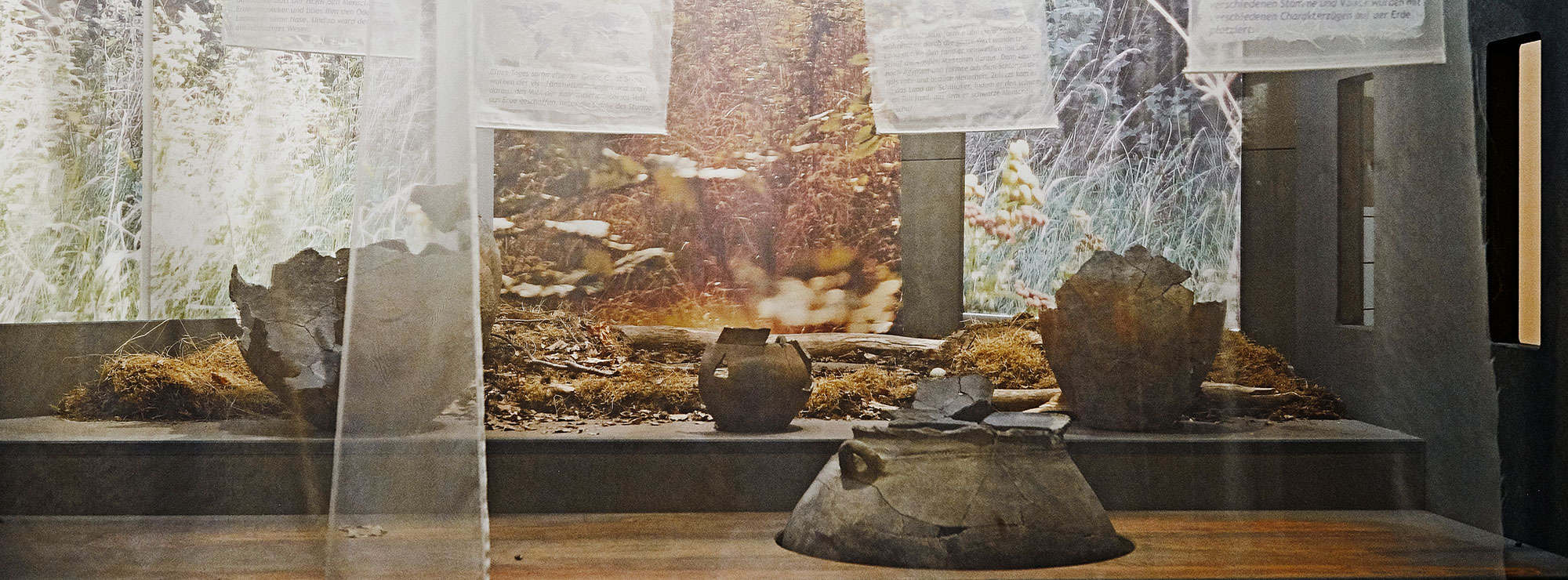
In the exhibition “Life in Clay”, you will find answers to these and many other questions. It covers subjects as diverse as religion, thatched houses and space shuttles; art, toilets and royal porcelain; bricks and half-timbering; animal figures from P. Ipsens Enke and funerary urns from the past two thousand years. What all of this has in common is that it requires clay.
Over millennia, potters, ceramicists, designers, artists and scientists have created countless practical and less practical, decorative and debatably decorative objects from clay. People have surrounded themselves with clay as a building material in homes, as containers for food and drink, and simply for decoration.
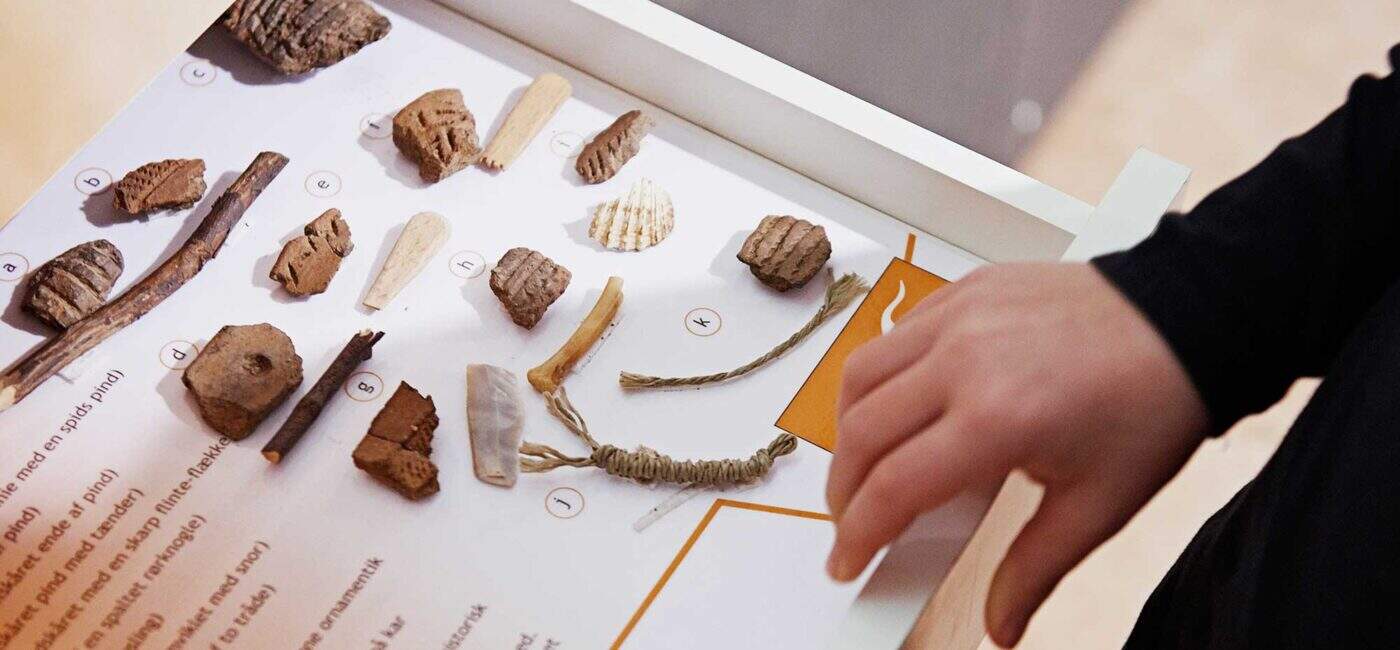
Look in the drawers. There is plenty of knowledge about clay here—and things you can touch.
In the exhibition, the boring panel texts are hidden away, but there is plenty of knowledge to be found in the drawers and cabinets throughout the exhibition. There are also many “hands-on drawers”, where children and curious adults are allowed to touch and try many different things.
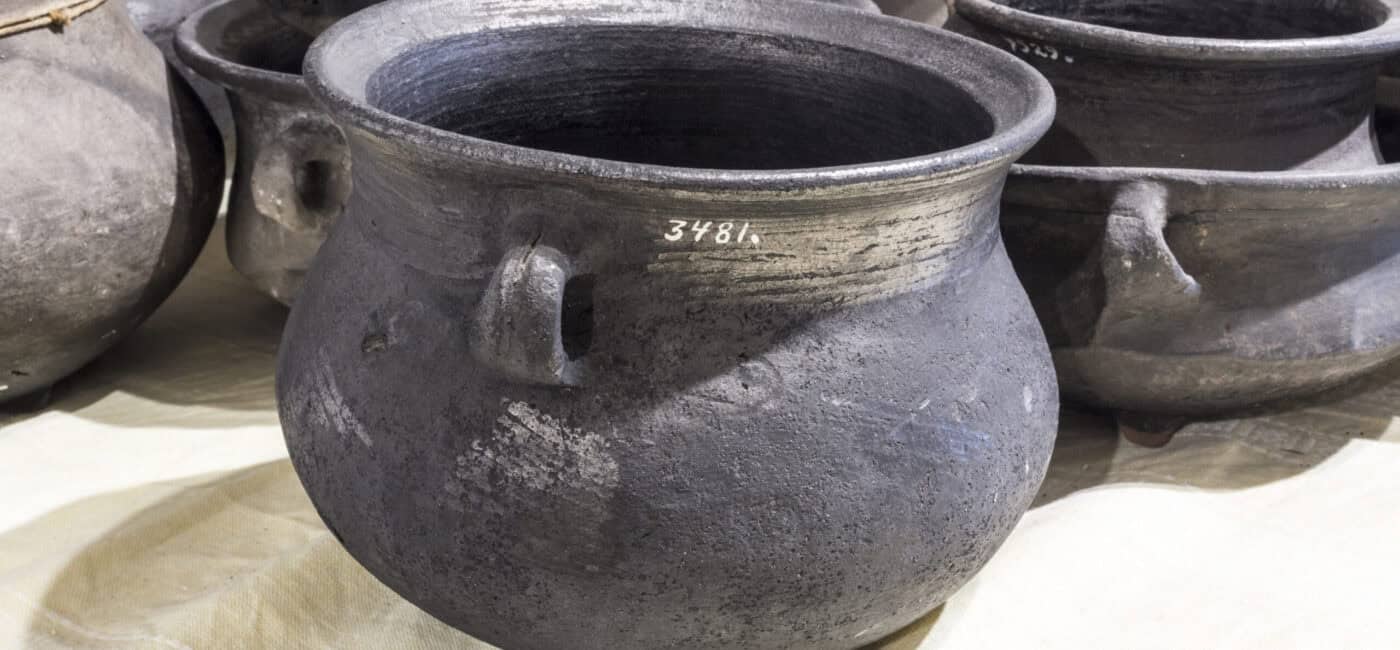
Fine and refined. The common farmer’s coffee pot in Jutland pottery imitates the bourgeoisie’s fine porcelain.
Jutland pots
Here in West Jutland—and especially around Varde—the production of Jutland pots was a major industry for centuries. Thousands of such pots were made and exported, shipped from loading places at Ho Bay. Half the population in several parishes here would have had to move if they had not had the income from the black pots. It is said that when a girl was to be married, the Zealander asked: “Is she young?” The person from Funen said: “Is she pretty?” and the Jutlander said: “Does she have anything?” But around Varde, people asked: “Is she any good at the clay?”
And what about life in clay? In several religions, creation myths describe how human beings are shaped from earth or clay and brought to life by a god. In some societies, potters are regarded as divine because they create life out of clay. At the museum, we have quantities of objects made of clay. The exhibition is built around such items from the past 6,000 years—but it is not only about clay, because the aim of the exhibition is to let clay recreate life.