







The Cold War
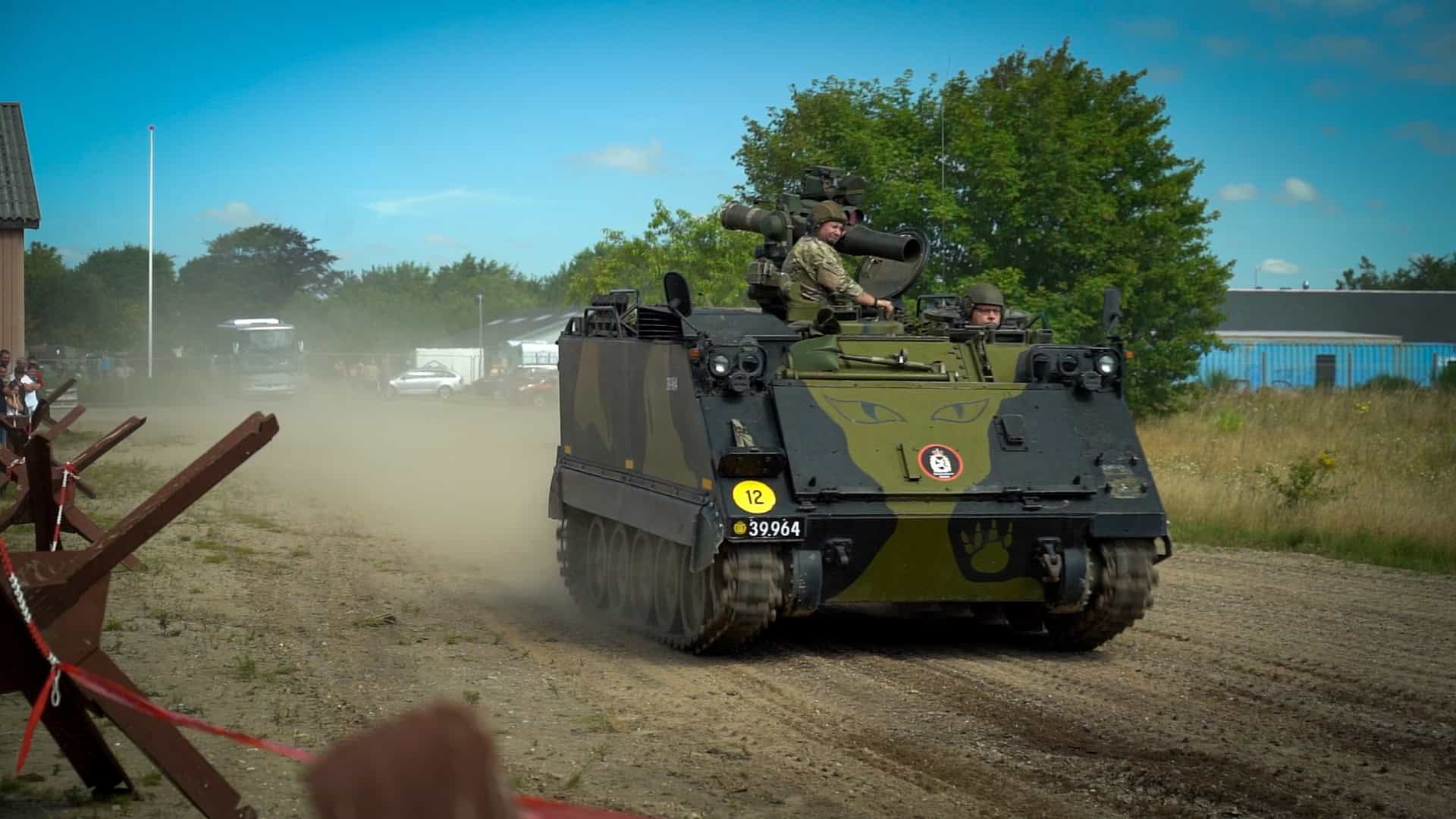
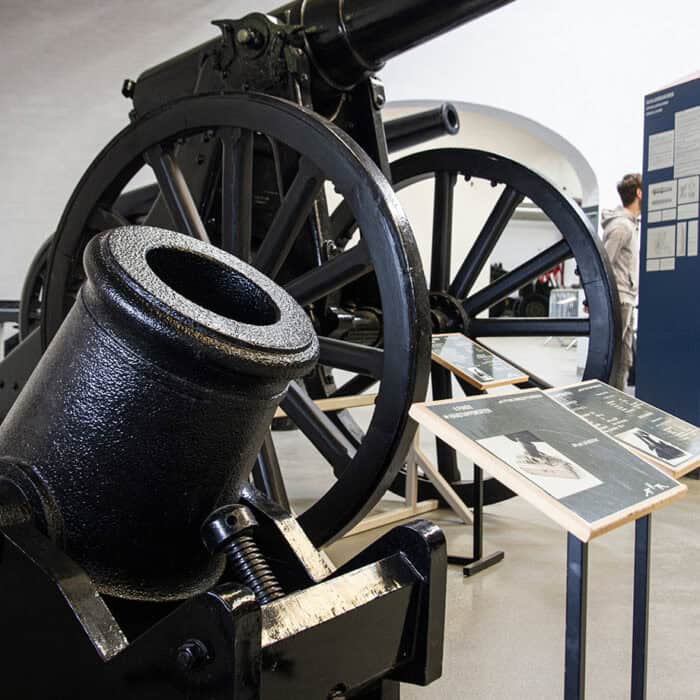
The museum features both vehicles and cannons from the Cold War. In the exhibition, you can see how Danish artillery operated up until the fall of the Berlin Wall.
The Cold War was the major geopolitical conflict that defined the period from the end of the Second World War in 1945 until the fall of the Berlin Wall in 1989. The conflict was between the two superpowers, the United States and the Soviet Union, along with their allies. It was called a cold war because the superpowers never went to war directly with each other. The Cold War never became a hot war, as it never escalated into the all-destroying nuclear war that many feared.
The Cold War’s cannons
The exhibition’s main focus is the cannons of the Cold War. They range from the small, mobile 105 mm cannon to a self-propelled M109 howitzer and a 203 mm howitzer, the heaviest artillery piece used by the Danish artillery. The exhibition also features the large American MGR I Honest John rocket, which was part of the Danish artillery from 1960. The Honest John rocket could carry a nuclear warhead and reminds us of the gravity of the Cold War.
In the exhibition, you can climb into a self-propelled howitzer and an armoured personnel carrier fitted out as a fire-control centre, and get a sense of the soldier’s cramped conditions—or lack of space. You can also try on a fragmentation vest and a Kevlar helmet. The Armour & Artillery Museum is the place where you can touch and try things out and let your inner nerd loose.
Danish artillery and world history
A panel exhibition tells the story of the Danish artillery’s role in relation to the political world history of the 20th century, from the Potsdam Conference in 1945 to the fall of the Berlin Wall in 1989, the war in the former Yugoslavia in the 1990s, the terrorist attack in New York on 11 September 2001, and up to the Muhammad cartoons crisis in 2006.
You can also experience

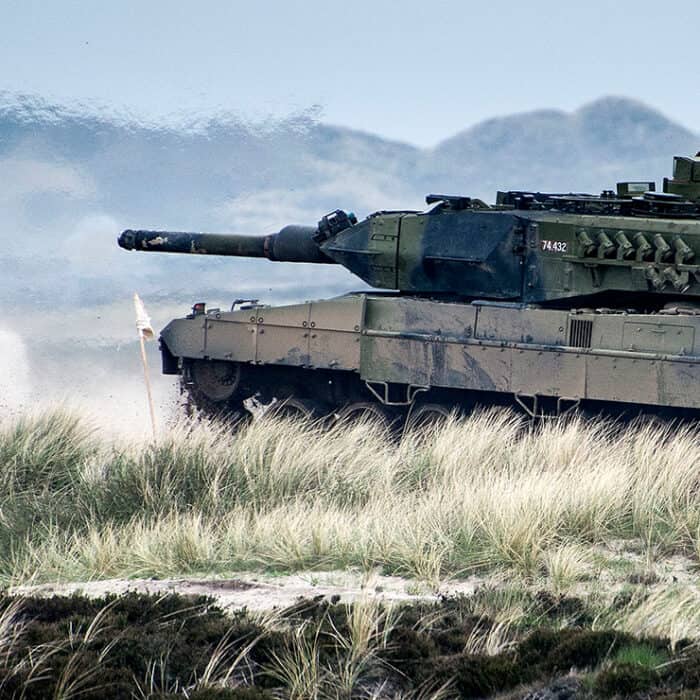
Exhibitions at the Armour & Artillery Museum