






Æ gaf – “An exceptionally convenient fishing spot”
“Æ gaf” – yes, the name sounds quite exotic. Especially if you are not familiar with the Nymindegab area. The name is the local West Jutland term for the “gap” or the “outlet” that used to run from Ringkøbing Fjord out to the North Sea.
Before an artificial lock was built at Hvide Sande in 1931, and before the railway was extended to Ringkøbing in 1876, “Æ gaf” was the only connection between the fjord and the North Sea—meaning the most important route out to the wider world. But the powerful forces of nature meant that the outlet was constantly shifting. On the oldest map, drawn by Johs. Meyer in 1650, the outlet lay opposite the mouth of the Skjern River. Over the next 200 years, up to 1845, the outlet moved almost 15 km south. Sea and wind moved vast amounts of sand, which at times meant the entrance was completely blocked. Soon after, the waters of the fjord created a new outlet further south.
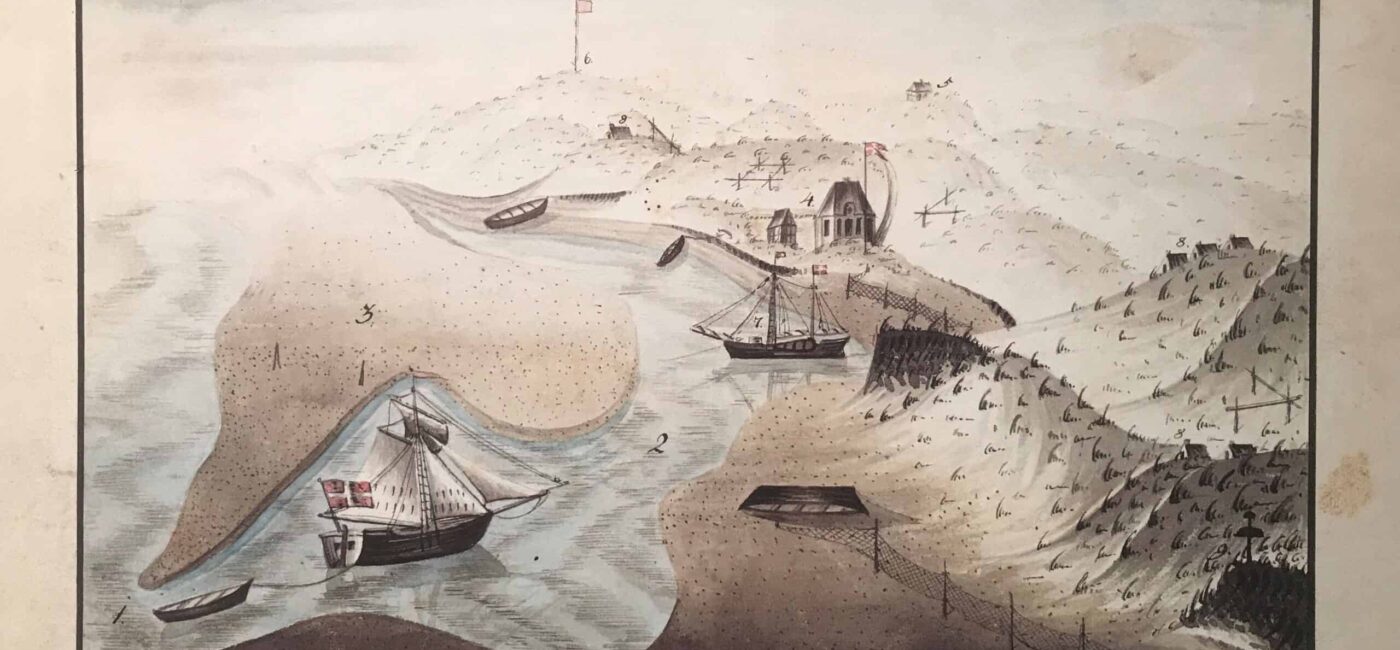
The oldest map (prospect) of Nymindegab shows Æ gaf (the gap) from the North Sea to Ringkøbing Fjord. Here you can clearly see how Nymindegab lay sheltered by Holmsland Klit (natural harbour).
Around 1800, the gap lay opposite present-day Nymindegab—but it was now a narrower channel running to the southwest. To avoid flooding of the lower-lying meadow areas, which were important to local farmers, from 1818 onwards the outlet was periodically dredged. Another reason was that fishermen and cargo vessels needed a navigable entrance to Ringkøbing Fjord.
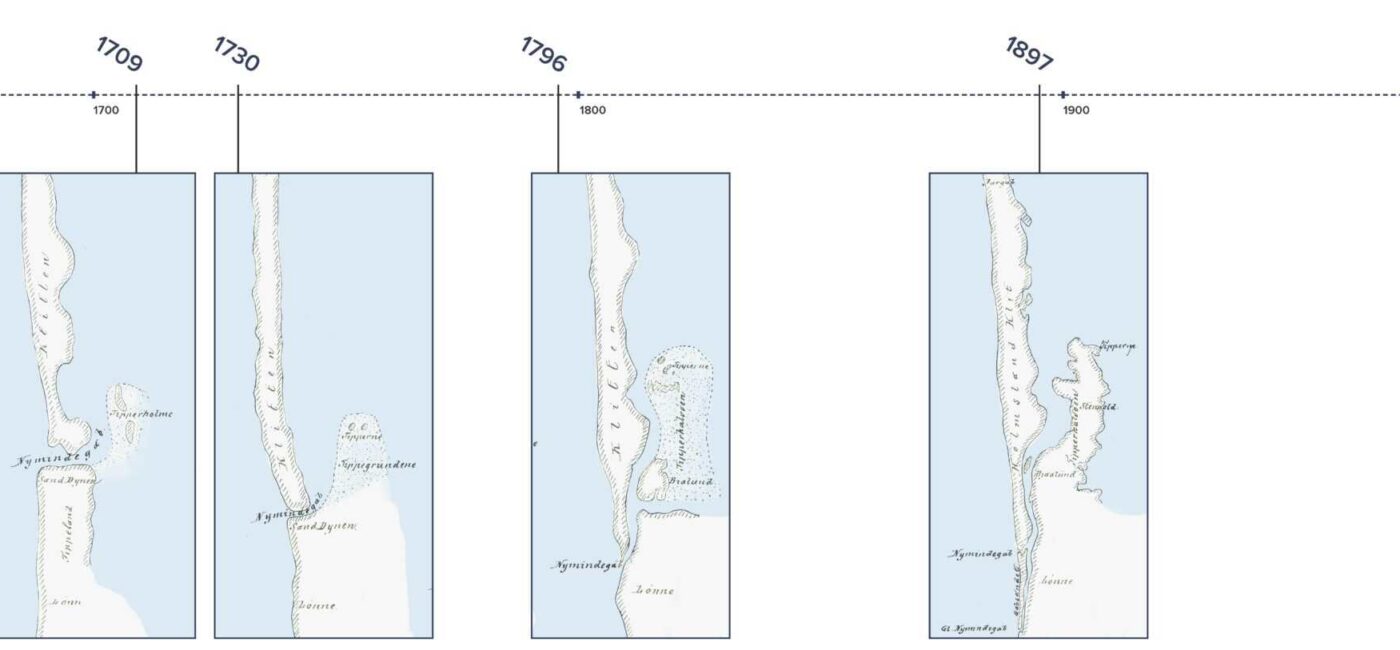
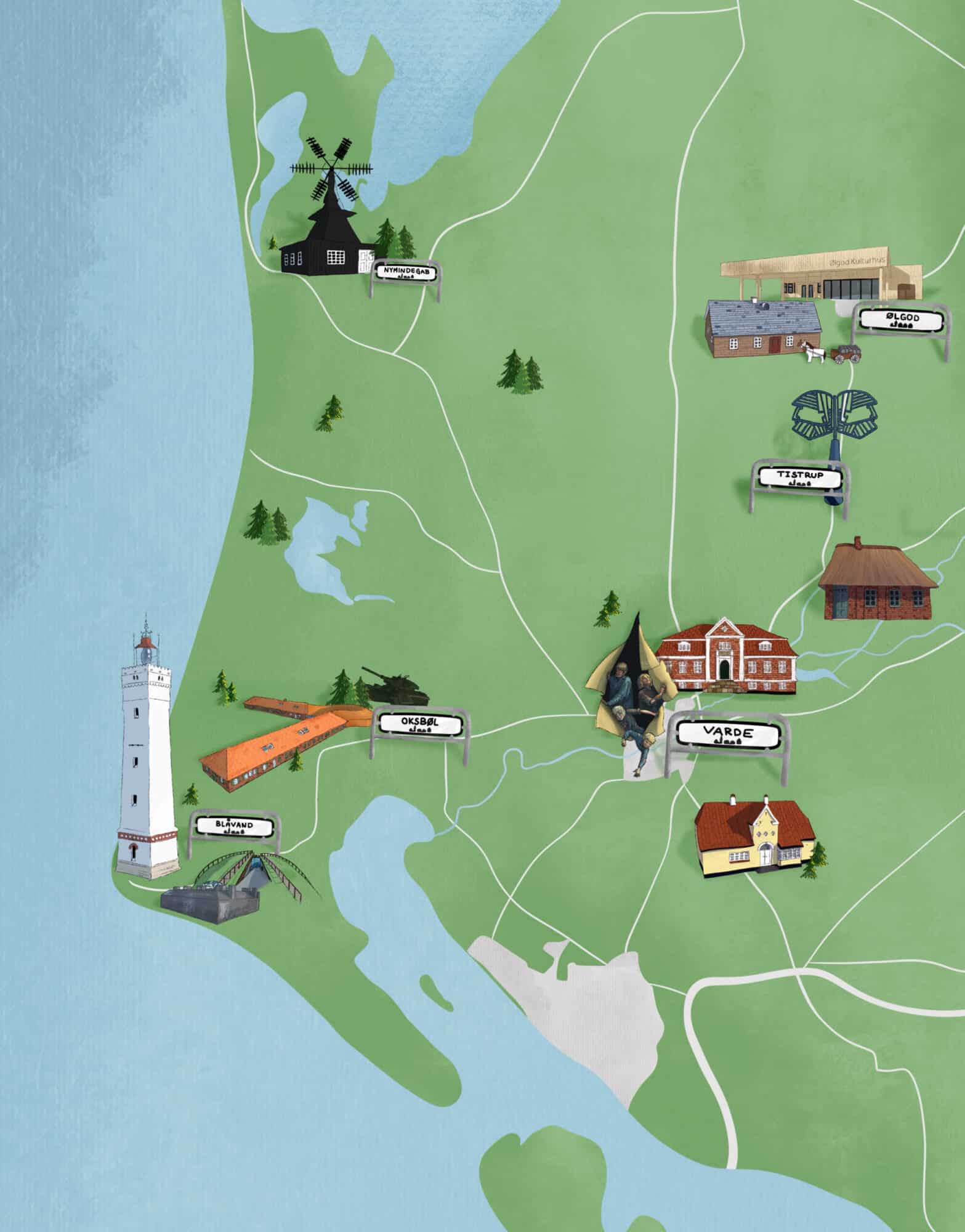
The development of Æ gaf since 1650. The gap periodically shifted further and further south.
An exceptionally convenient fishing spot
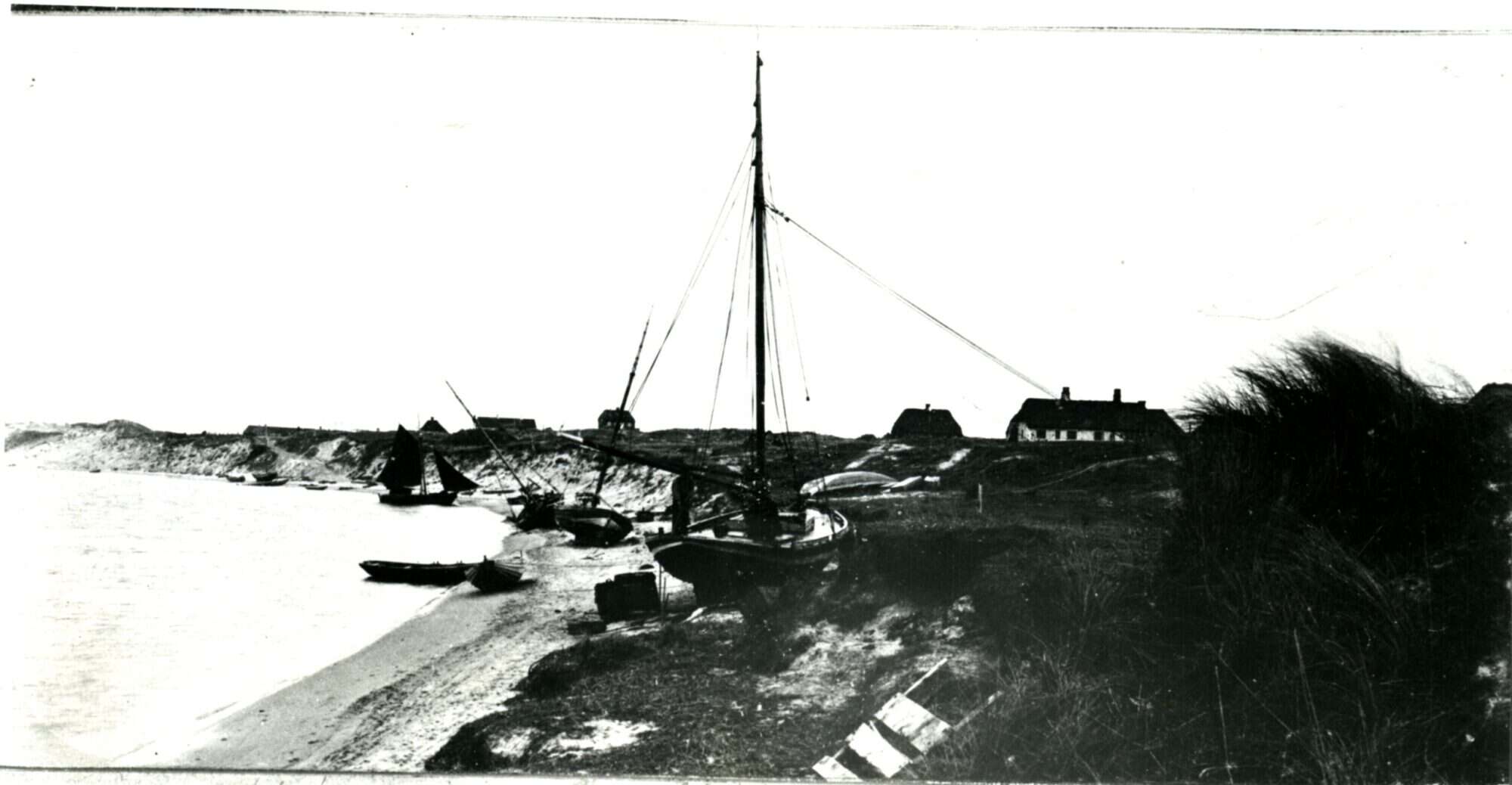
Today it is not so easy to spot, but back in the 1870s Nymindegab was considered Denmark’s largest fishing settlement and was the forerunner of the large-scale fishing from the port of Esbjerg. Nymindegab’s greatest advantage was that Æ gaf formed a natural harbour here, where ships could lie sheltered from the westerly wind. This meant there was no need to haul the boats ashore—as was necessary along the rest of the west coast—to prevent them from being smashed in the surf. Another important factor, just as crucial to Nymindegab becoming an important fishing settlement, is described by the local district bailiff in Varde, A. C. Wedel Heinen, in 1831:
”Nature has made this place an exceptionally convenient fishing spot, as the inlet to Ringkøbing Fjord offers the opportunity to supply bait of the quantities of herring that, in large shoals, run out of and into the fjord. This is a condition for a rich sea fishery.”
In spring, the herring made their way in through Æ gaf, and so it was easy to catch large quantities of herring here, which were used as bait for sea fishing. From March until Midsummer, when the herring shoals were at their largest, fishermen and bait girls therefore flocked to Nymindegab, where they set themselves up in small fishing huts—æ fiskerboder or bait houses. Sea fishing was also called line fishing or “bakke” fishing, named after the “bakker” with line and hooks that the fishermen brought out on the North Sea.
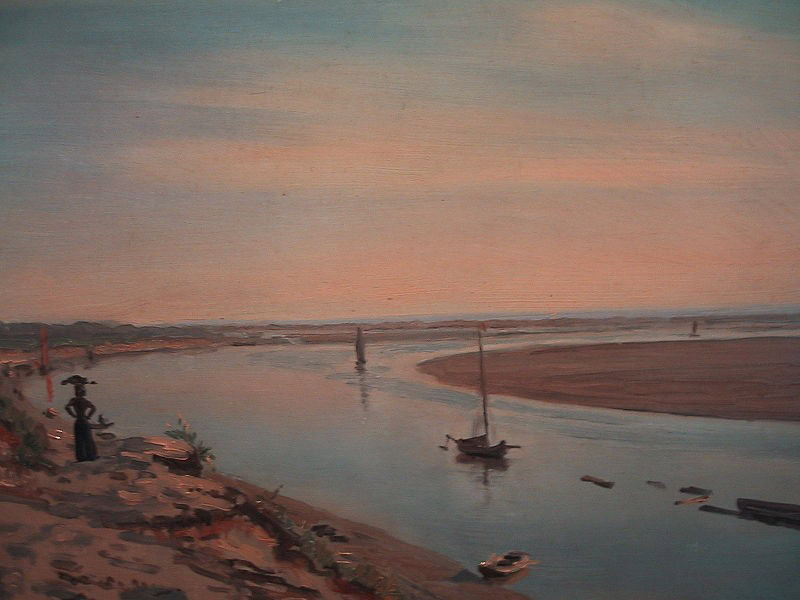
Laurits Tuxen’s painting from 1879 – shows Æ Gaf at Nymindegab with a bait girl and sea boats on their way out to the outlet – the North Sea can be seen in the background
The fishermen at sea
These were very busy and intense months for the fishermen and bait girls who worked with the fishery. They worked hard, often both night and day, to catch as much fish as possible and thus earn as much as possible. The weather was a decisive factor in how far out they sailed, and sometimes they had to spend the night at sea for several days because the wind was in the wrong direction. Once the hooks had been set, the boat’s anchor was dropped. If it was daytime, they waited about half an hour before hauling the hooks in. The fishermen brought sandwiches, but did not touch spirits when they were at sea. At night, the break usually lasted a couple of hours, so the fishermen could get a little sleep. Once the anchor had been raised, the hooks were hauled in while rowing, in the same direction in which they had been set. And then it was a matter of rowing the boat back in through the gap. An easterly wind was considered the most favourable, but if there was a storm from the west, the entrance through Æ gaf became dangerous, and the sea boat risked capsizing.
In 1840 there were about 20 fishing boats; in the 1870s about 12–15; but around 1895 there were such great difficulties in keeping Æ gaf navigable that the old form of fishing largely came to an end.